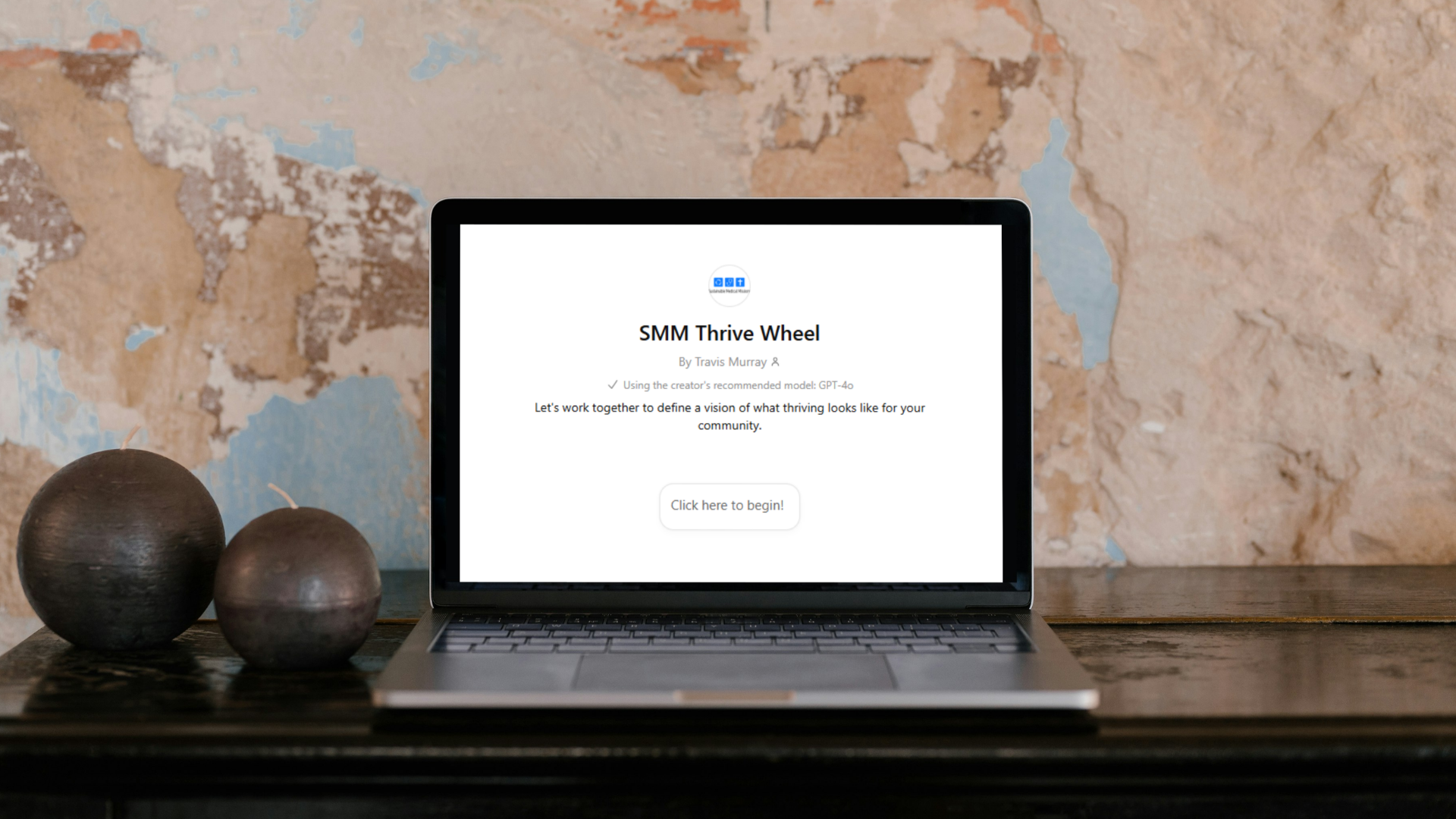
This project involved designing a custom AI-guided reflection and planning tool for Sustainable Medical Missions, a non-profit organization that partners with community healthcare and church leaders in Central and East Africa to build sustainable, locally led health and community development programs. The tool helps leaders define what it means for their communities to thrive and identify key areas for long-term sustainability and development.
Audience: Community healthcare and church leaders in Central and East Africa partnering with a non-profit organization
Responsibilities: Instructional Design, Conversation Flow Design, Prompt Engineering, UX Design
Tools Used: ChatGPT Custom GPT, Prompt Engineering, Conversation Flow Mapping, Canva, Google Docs, Squarespace (for visual and resource hosting)
The Problem
Sustainable Medical Missions wanted community leaders to develop long-term sustainability plans, but traditional reports and externally designed frameworks were not producing meaningful reflection or locally owned plans. Many leaders had never been asked to define what a “thriving community” looked like in their own context, and the organization needed a structured way to guide reflection without imposing outside definitions of success.
The Goal
The goal was to design a guided process that would help community leaders define what thriving looks like in their own communities, identify key areas that contribute to thriving, and begin outlining measurable indicators for growth. The tool needed to guide reflection and planning without imposing an outside framework.
The Solution
The solution was a Custom GPT called the “Thrive Wheel,” which guides community leaders through a structured reflection process to define key areas of community thriving and identify what success would look like in each area. The tool acts as a facilitator that asks reflective questions and helps leaders organize their ideas into a framework that can be used for planning and evaluation.
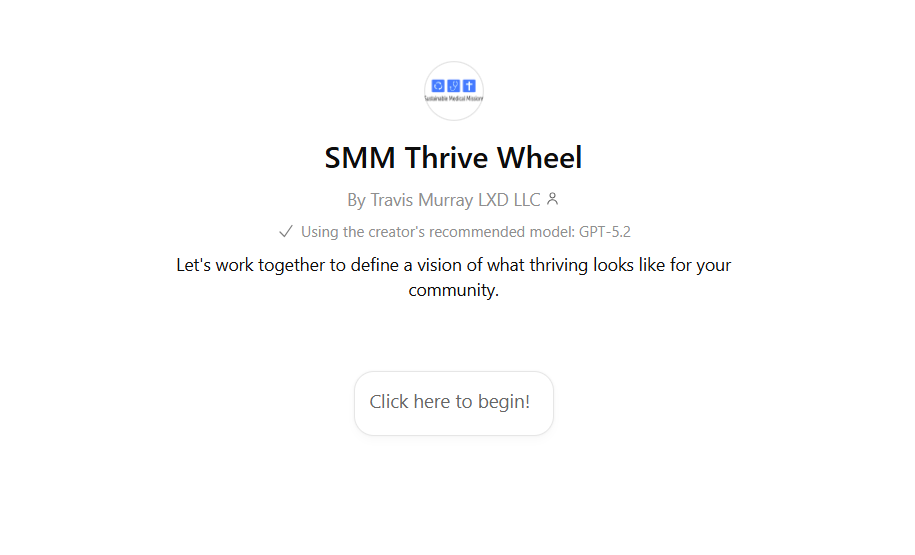
SMM Thrive Wheel: The welcome screen introduces the goal and easy one-click start.
Design Challenges & Constraints
Through multiple meetings, emails, and testing sessions with organizational leadership and partner leaders in Tanzania, Malawi and Rwanda, several cultural, technical, and instructional constraints emerged that significantly shaped the design of the tool. These constraints influenced the structure of the conversation, the pacing of questions, and the overall user experience.
Key design challenges included:
Many users had never been asked to formally define what a “thriving community” looks like, so highly open-ended questions were difficult at the start
The process needed to be structured and guided, but not impose outside frameworks or Western definitions of success
Users would primarily access the tool on mobile devices with varying internet connectivity
Long questionnaires would lead to user fatigue, so the process needed to be broken into smaller steps
Cultural context emphasized relational communication and reflection rather than formal planning language
The tool needed to work within ChatGPT constraints such as login barriers and message limits
The final output needed to be simple, clear, and usable for planning and future evaluation
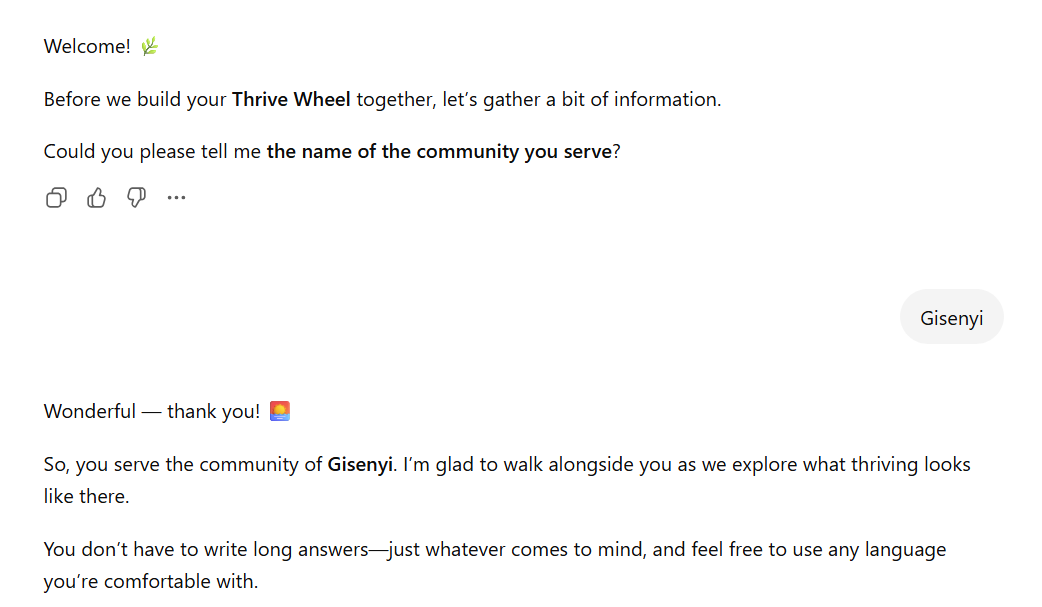
Initial Question: A simple one-question eases the user into the guided experience.
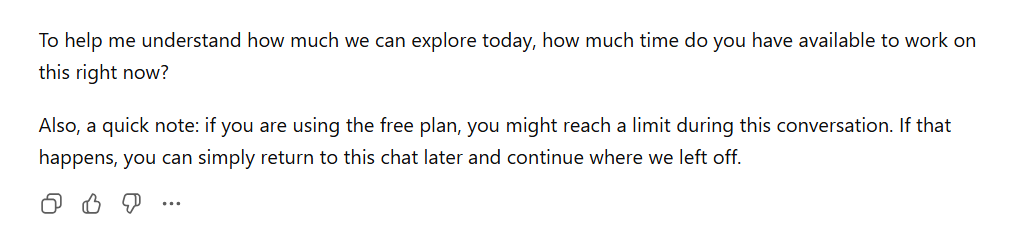
Adaptive Pathway Logic: The experience adjusts to user time constraints to increase completion rates.
The Design Process
Based on the constraints and feedback gathered from subject matter experts, the Thrive Wheel GPT was designed as a guided reflection and planning experience structured into phases. The conversation flow was intentionally designed to reduce cognitive load, guide users step-by-step, and gradually move from reflection to planning.
Key design decisions included:
Structuring the conversation into phases to guide users from reflection to planning
Showing the Thrive Wheel visual early so users understood the final goal before beginning
Starting with strengths and vision rather than problems to encourage ownership and positive engagement
Limiting the conversation to one question at a time to reduce confusion
Using adaptive pathways so users could choose a shorter or more detailed process based on their available time
Prompting users to consider additional areas to uncover blind spots and encourage holistic thinking
Summarizing responses into structured Thrive Wheel categories and indicators for planning and evaluation
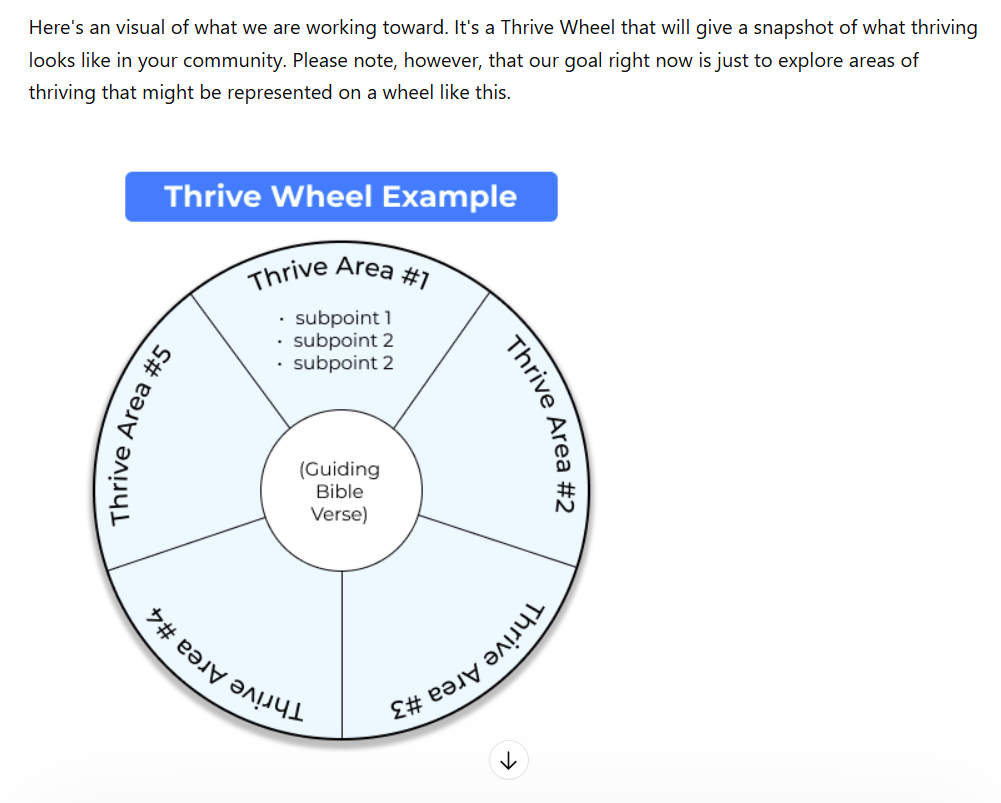
End Goal: Before starting, the user sees a visual concept of what might result from this work.
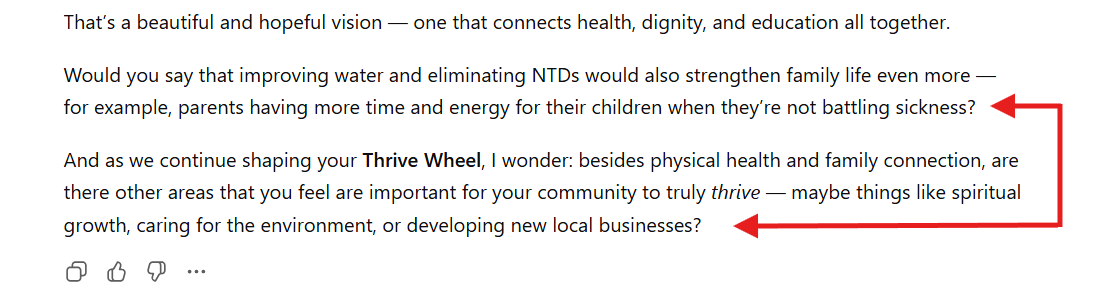
Reducing Confusion: Early iterations were delivering two or more questions at a time to the user.
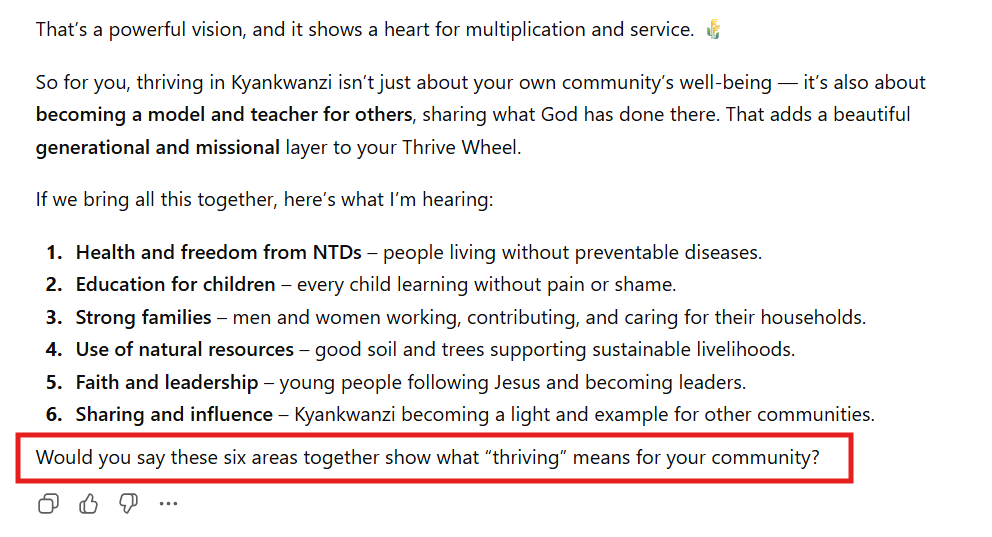
Confirmation Checks: Summaries provided to ensure user’s input is captured and articulated accurately.
GPT Engineering: Instructions created with intentional structure, rules and conditions.
Testing and Feedback
The Thrive Wheel GPT entered an informal testing phase when organizational leadership shared the tool with regional partner leaders in Africa to explore and provide feedback.
Early feedback indicated that the tool was easy to use and helpful for guiding community evaluation and planning conversations, and this feedback was used to refine the conversation flow and structure of the tool.
Testing and informal use are still ongoing as the organization continues exploring how the tool may be integrated into partner development and sustainability planning processes.
Client Testimonial:
“Travis is a rare combination of exceptional technical skill and a caring guide. He helped us navigate the complexities of AI and use it to transform our work and improve our outcomes.”
— David Snyder, Executive Director, Sustainable Medical Missions
Reflection
This project was especially meaningful because it allowed me to work with an organization that is making a significant impact on communities, reaching nearly five million people through its programs. Being able to help support tools that guide community leaders in shaping a vision for their own communities was both professionally interesting and personally meaningful.
Throughout the process, I enjoyed refining the conversation flow, instructions, and guardrails and seeing how small changes in structure significantly changed the quality of the output.
One of the most interesting design challenges was balancing the organization’s core conviction that thriving must be defined locally—not imposed from external frameworks—while still designing prompts that helped users explore blind spots and think holistically about community development.
This project reinforced for me that instructional design is often about designing systems and conversations that help people think more clearly, plan more intentionally, and move toward meaningful change in their communities.